Land Skills Hub at Fivepenny Farm
Delivering an introductory course in land management skills for young people, on a small-scale agroecological farm in West Dorset.
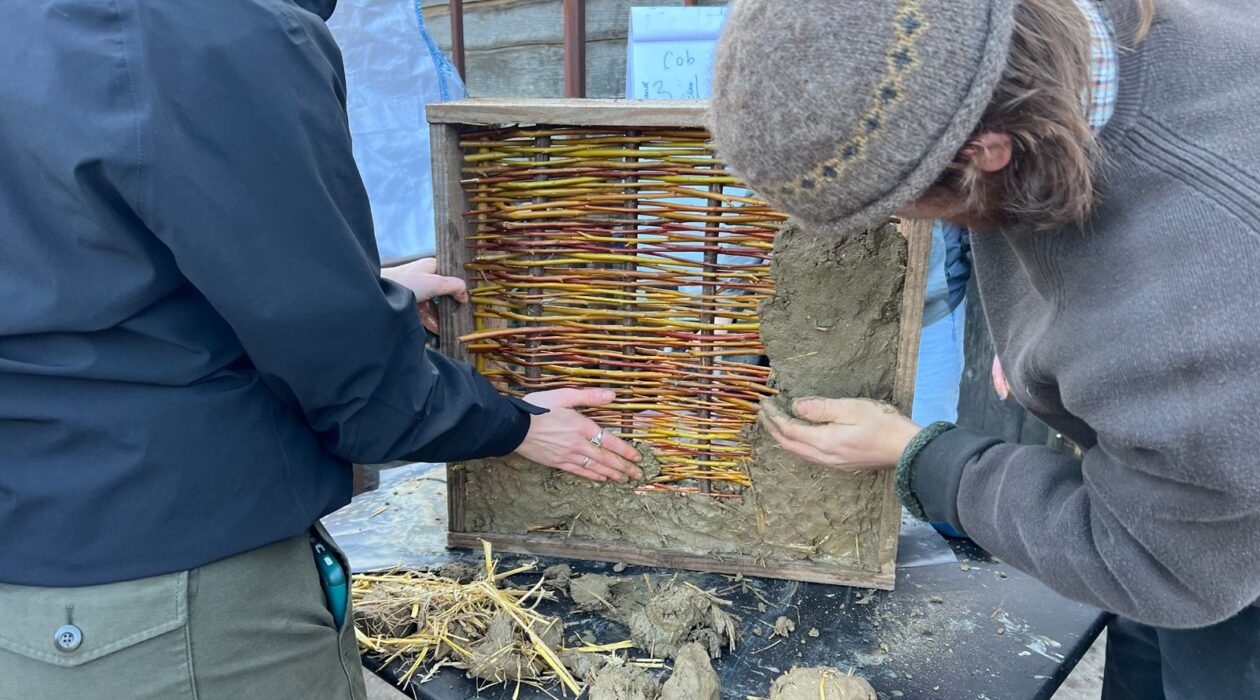
Delivering an introductory course in land management skills for young people, on a small-scale agroecological farm in West Dorset.
The Land Skills Hub is a land-based education centre based at Fivepenny Farm, a small-scale agroecological farm in West Dorset managed by Jyoti Fernandes and her family. The Hub was founded by Jyoti with the aim of lowering barriers to engagement in land-based skills, crafts, and activism, and operates as part of the Peasant Evolution Producers Co-operative (PEPC).
The Hub runs courses and events throughout the year, many focused on specific practical skills such as natural building, apple pressing, and land management, alongside political and community education, all within an explicitly intersectional and justice-oriented framework. The Land Skills Hub’s mission is to create a strong, diverse community equipped with both the practical knowledge and the political understanding to care for land and for each other.
Fivepenny Farm provides a rich learning environment: a working agroecological farm with timber-frame and cob buildings, an orchard, a mixed livestock herd, vegetable growing areas, and wild land, placed within the beautiful Dorset National Landscape and a network of local farmers and craftspeople.
FiPL grant awarded: £14,967
This project addressed People, Climate, Nature and Place outcomes. FiPl support was awarded to deliver a residential introductory course in land management skills for young people aged 18–25, structured across three phases:
The course was delivered in March 2026, with the learning programme delivered by eleven specialist facilitators, selected to bring together expertise in a wide range of land-based skills. Many facilitators were selected from the local area with skills traditional to this landscape such as orchard management, sheep and goat keeping, cheesemaking, and building with local materials. Others travelled in to represent a diversity of perspectives and to create connections to the wider national and international ecosystem of land work and food sovereignty.
The course has demonstrated that there is a significant unmet need for accessible, high-quality introductions to sustainable land skills for diverse audiences, and that the Land Skills Hub is well placed to meet it.
The most notable and valuable theme running through the feedback is the transformative effect of the course on participants’ sense of access to and belonging in the landscape. Several participants described a fundamental shift in how they understood their relationship to land, rural space, and land-based careers.
Key future improvements planned are:
Please contact the FiPL team on fipl@dorsetcouncil.gov.uk if you are thinking of running a similar programme and would like more detailed information.
(Quotes from participants)