What to do next

Before you make an application to the Farming in Protected Landscape Programme, please read the Guidance below. An overview of the scheme can be found here and information about Previous projects here . When you are Ready to Apply, all the necessary forms can be found here.
Who can apply

The Farming in Protected Landscapes programme is open to all farmers and land managers (including from the private, public and charity sector) in a National Park, National Landscape or the Norfolk Broads – or where activity on the ground can bring benefit to one or more of those areas.
You must manage all the land included in the application, and have control of all the activities you’d like to undertake, or you must have written consent from all parties who have this management and control.

Other organisations and individuals can apply, as long as they do this in collaboration with a farmer or land manager, or in support of a farmer or group of farmers.

Common land is eligible for support through the Programme. You can apply as a landowner with sole rights, or as a group of commoners acting together.

The programme supports activity on any land within the Dorset National Landscape. It can also support activity on other land where projects can demonstrate benefit to the Dorset National Landscape, or the Dorset National Landscape’s objectives or partnership initiatives. Most of the funding will probably be provided to projects within the National Landscape boundary.

You can see the boundary by visiting the Dorset Explorer website. Click on layers and search for National Landscape (AONB).


What the Programme will pay for

The Farming in Protected Landscapes Programme pays for projects that, in the opinion of the Local Assessment Panel (see ‘Application assessment’ below) provide value for money and meet at least one of the outcomes listed below, under four themes:

Climate

  • More carbon is stored, sequestered or both
  • Flood risk has been reduced
  • Better understanding among farmers, land managers and the public as to what different habitats and land uses can deliver for carbon storage and reduced carbon emissions
  • The landscape is more resilient to climate change

Nature

  • there is a greater area of wildlife-rich habitat
  • there is greater connectivity between habitats
  • existing habitat is better managed for biodiversity
  • there is an increase in biodiversity

People outcomes

  • More opportunities for people to explore, enjoy and understand the landscape
  • More opportunities for more diverse audiences to explore, enjoy and understand the landscape
  • Greater public engagement in land management, for example through volunteering

Place outcomes

  • The quality and character of the landscape is reinforced or enhanced
  • Historic structures and features are conserved, enhanced or interpreted more effectively
  • Increase in the resilience of nature-friendly sustainable farm businesses, which contributes to a more thriving local economy

Payment Rates

  • If an applicant will not make a commercial gain through a project, they could receive up to 100% of the costs.
  • Where an applicant would benefit commercially from a project, they could receive between 40% and 80% of the costs through the Programme, depending on how much commercial benefit the project will give them.
  • The Programme works alongside – not in competition with – Defra’s existing and new schemes, adding value where it is most needed. If a potential project can be rewarded through those schemes instead, you will be made aware of them.
  • FIPL funding cannot be used as a direct substitute for these (even if the other scheme is currently closed) unless the FiPL project can be shown to deliver additional outcomes. Dual funding checks will be carried out for all activities prior to a grant being awarded.
  • If an activity is equivalent to one under Countryside Stewardship (CS), the Programme payment rate will be the same as the CS rate. If not, we will base Programme funding offers on the projected costs of an activity (with final payments made against evidenced costs).

Maintenance Agreements

  • Capital infrastructure assets (including, but not limited to, fences, gates, building restoration), should be maintained for 5 years from the date of completion.
  • Machinery assets (for example a brush harvester for grassland restoration) should be maintained for 5 years from the date of purchase.
  • The requirement to maintain natural, cultural and access activities (for example, management of grassland, restoration of a limekiln) delivered as part of programme will cease no later than 1 April 2029 (this date is subject to change due to extension of programme).

Your project must also help to deliver at least one of the objectives of the Dorset National Landscape Management Plan. To help you, these Dorset National Landscape Management Plan objectives are also listed in Annex A of the downloadable Programme Guidance document below, as well as priorities identified for 2026/27 by the Local Assessment Panel.

Grant awards are usually between £5,000 and £100,000 but the Panel are currently looking for larger impactful projects to support at this stage.

You may like to look at our Supported Projects Page which lists all 220 funded projects.


How to Apply and Application Assessment

Please see the How to Apply Page which will help you work through the application process.

More information

If you have a question about the Farming in Protected Landscapes programme or want to talk through a potential project, please get in touch:

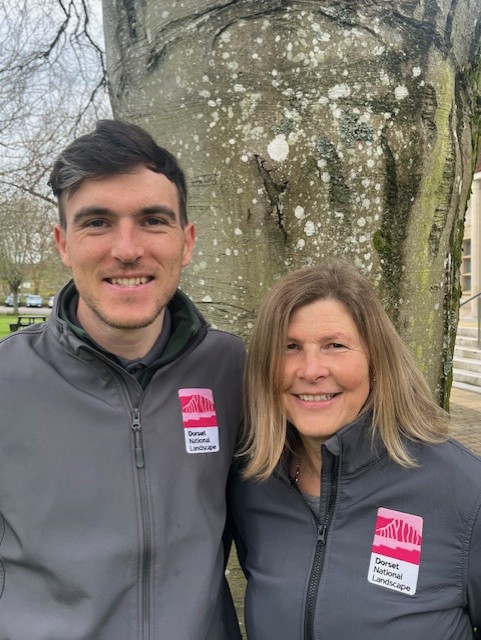
Rachel Janes

Farming in Protected Landscapes Officer

Rachel.Janes@dorsetcouncil.gov.uk

Ben Mogg

Farming in Protected Landscapes Support Officer

Ben.Mogg@dorsetcouncil.gov.uk

×